Plenty of strong and beautiful poems are made from plain language … You can find moving, rich language in books, on walls, even in junk mail ... (Dunning & Stafford, 1992, p. 3).
Introduction
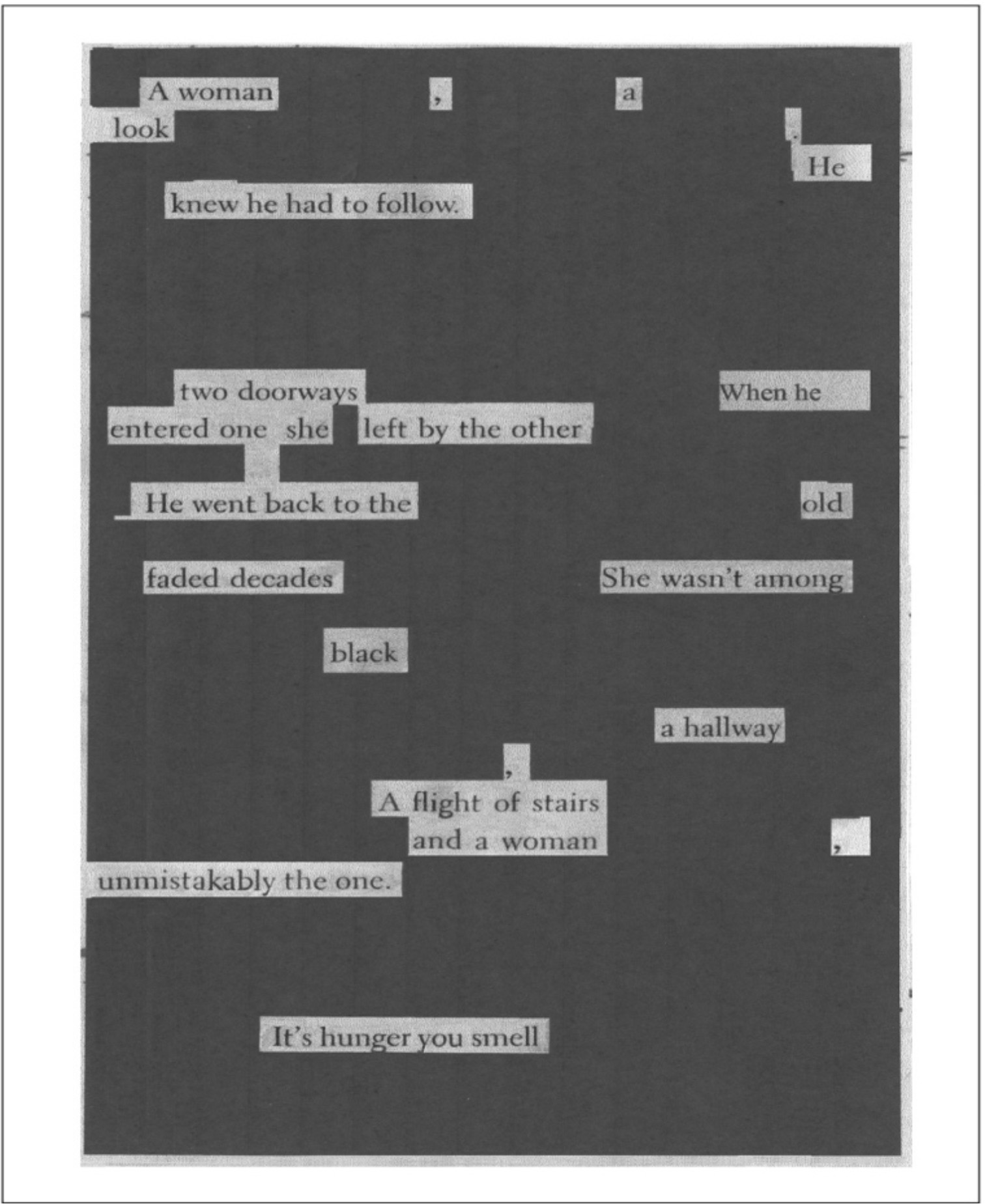
Blackout poetry is a creative practice that finds poetry in existing language, whether drawn from literary works, everyday prose, newspapers, or magazines. It involves selecting a few words from a text – literary or not – to create a poem, while obscuring in some way the remaining text. While some writers use the term source text to refer to the text from which a blackout poem is generated, I prefer the term host text. This alternative term avoids connotations that suggest the primacy of the host text over the blackout poem or imply that the blackout poem is merely an adaptation. Instead, host text connotes intertextuality and integration: an act of hospitality and welcoming of a poem within another text. This framing aligns with the notion that the blackout poet may choose to reflect upon, respond to, or diverge entirely from the host text. The resulting blackout poem may manifest as a minimalist composition akin to a heavily redacted document, as illustrated in Image 1.
Image 1
Example of a blackout poem. Used with the permission of M. Ladenheim, from the article ‘Engaging Honors students through Newspaper Backout Poetry’ (Ladenheim, 2014, p. 51).
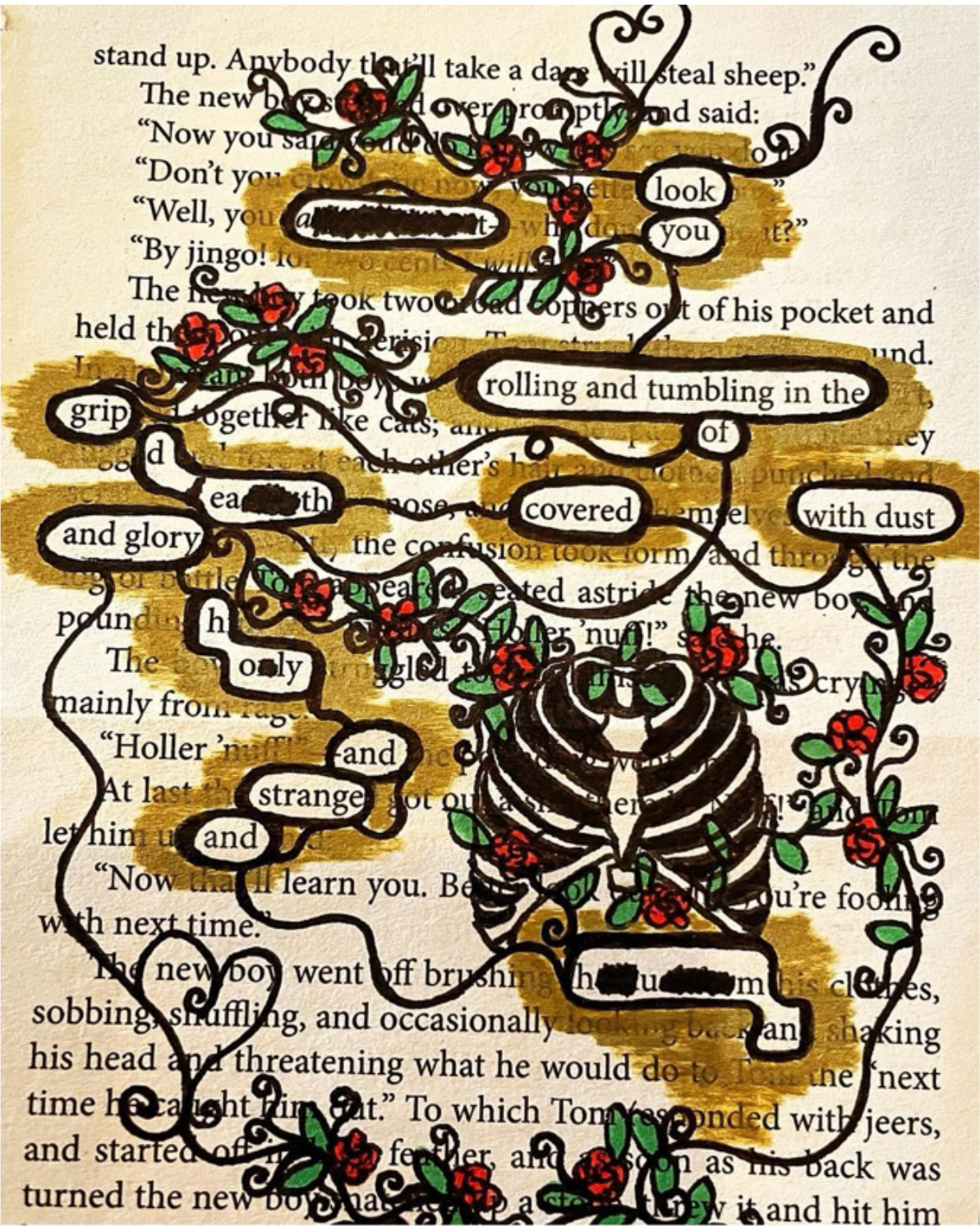
Alternatively, it may evolve into an elaborate visual illustration accompanying the textual composition, as illustrated in Image 2.
Image 2
Example of a blackout poem with more elaborate visual composition. Used with the permission of K. Bonnett, from Instagram account katemarigoldpoetry
Blackout poetry belongs to the genre of found poetry, a form of poetry where poets take existing texts and alter them in some way to generate a new poem: “akin to ‘the literary version of a collage’” (Ramser, 2020). Four categories of found poetry have been identified: cut-up, cento, free-form, and erasure (e.g., Coyle, 2023; Ramser, 2020). Blackout poetry is often subsumed into erasure poetry, which refers to the practice of selecting words out of a host text while removing the remaining text, thereby generating a standalone poem. Erasure poetry differs from blackout poetry in that the latter does not erase or remove parts of text but instead blackens out or obscures them. Hence, blackout poetry is a distinct practice – one that may well be considered a fifth category of found poetry.
Over the last decade, blackout poetry has garnered increased academic and literary attention; however, research on its characteristics as a poetic genre and its use with language learners remains notably scarce. Blackout (and erasure) poets have proclaimed the deep engagement with the materiality of language this practice invites (King, 2012). As shown in the analysis of the literature, blackout poetry emerges not only as a rich literary genre but also as a means of self-reflection and as an educational activity. Thus, the aim of this article is to discuss how intrinsic features of blackout poetry contribute to its value for English language learners. Specifically, the paper reports an epistemological investigation of the defining features of blackout poetry guided by the following research question: What defining features of blackout poetry are identified in scholarly literature surrounding blackout poetry? Thematic analysis is used to answer the research question, and then the results are subsequently discussed within the context of English language learning, where blackout poetry holds promise for developing literary competence, for promoting language exploration, and for supporting engagement in sociopolitical discourse.
Language, Literature, and Experience
Literature has always had a central place in education. Since antiquity, poets such as Horace and Ovid have emphasized the aim of literature as docere delectando, that is, to teach by entertaining (Barry, 2017, pp. 24-26). According to Aristotle (n.d.), poetics owes its origin to humanity’s natural ability to imitate reality and that this mimetic quality enables learning. The distance literature maintains from reality is also what invokes aesthetic pleasure. Much of its aesthetic and entertaining effect has also been attributed to the “fictive qualities” of its language (Barry, 2017, p. 26). Post-structuralist and deconstructionist theories brought attention to the “language’s endemic unreliability and slipperiness” and to the significance found in omissions (p. 76). Consequently, postmodern literary theory perhaps placed less emphasis on rigid binary definitions dictating the parameters of literary language. Blackout poetry exemplifies this shift, operating through both slippery and fragmented language. On the one hand, it vividly blurs the lines between prosaic and poetic expression, or between ordinary and literary language. On the other hand, it ostentatiously showcases fragmentary language, a disruption that can invoke a liberation stemming from the escape from canonical norms and from the “claustrophobic embrace of fixed systems of belief” (p. 86).
Bringing literary texts into the pedagogical context has inspired the development of the rather slippery concept of literary competence. Culler (2002), for example, distinguishes literary competence, understood as the ability to perceive and interpret poetic structures, from linguistic competence, which primarily helps readers to understand non-fictive language but does not necessarily lead them to engage in interpretation. Although separating language and literature may seem absurd to some – as literature cannot exist without language – this distinction becomes particularly relevant for foreign language learners. When reading literature in another language, linguistic competence, considered distinct from literary competence, may play a central role. A foreign language learner is first required to decode linguistic signs before they can proceed to literary interpretation. In any case, the emphasis that Culler and his contemporaries placed on literary conventions, along with an institutionalized perspective of literature and interpretation, may risk diminishing the role of the reader in the meaning-making process. Such a convention-driven, institutionalized account of literary engagement surely takes some fun out of reading literature. As McGillis (1985) wittingly puts it, literary incompetence “might not be a bad condition” in such cases: “Without conscious and calculated designs, we are free to learn, to receive in order to create” (p. 144). In this view, understanding literary language becomes closely related to personal experience and response. Rosenblatt (1994) has similarly highlighted the role of the reader and the aesthetic effect of literary reading. She emphasizes that interpretation assumes a transaction between the reader’s lived experience and the text, highlighting the importance of the individuality of the reader in shaping meaning.
The need for a balanced account that integrates personal experience with literary awareness leads to Torell's (2001) concept of literary competence. Torell suggests that literary competence is a result of performance competence, constitutional competence, and literary transfer. Performance competence refers to the reader’s awareness of literary conventions and structures that support meaning-making. Constitutional competence describes the personal interpretations of the reader, while literary transfer refers to the acknowledgement of the distance that a literary text establishes from itself and reality. Adding the subjective element – the reader’s own interpretation and “unique experience of life” (p. 374) – is what makes literary competence unique to humans. Thus, Torell’s concept of literary competence considers the poetic structures that distinguish literary from non-literary texts, the role of the reader, and the reader’s experiences and perspectives, while maintaining a balance between personal interpretation and literary conventions.
Engagement with aesthetic reading and artistic practices is a valuable aspect of experiential learning. Dewey (1994) highlights that experience is generated through the interaction between process and product. An aesthetic experience, in his view, is the amalgamation of “undergoing, outgoing and incoming energy” generated during this interaction (p. 208). Aesthetic accounts of learning proclaim the importance of experiencing: Experience isn’t just something that happens. It becomes meaningful because we think about it and interpret it. The way we interpret it is influenced by our culture, society, and historical moment (Illeris, 2016). Through this interpretation and reflection, aesthetic experiences acquire a transformational dimension that aligns with Dewey’s concept of “learning by doing” (Illeris, 2016). In this view, knowing how to reflect on the experience, approach it, and construct it, is what stimulates learning. Within educational contexts, aesthetic experiences – such as blackout poetry – may offer a multisensory aspect of learning and contribute to both knowledge development and identity building (Høeg Karlsen, 2020). Such aesthetic experiences can serve as powerful contributors to a holistic educational practice that nurtures values, challenges ideas, and offers necessary tools for students to become active participants in democratic societies (Lovat, 2013).
All these ideas on literature, language, and experiential learning highlight the importance of the literary and aesthetic experiences in education. Regarding foreign language learning, however, poetry often remains an intimidating literary genre for both teachers and students (e.g., Hall, 2015; Khatib, 2011; Kuru Gönen, 2018). Research into students’ perspectives on learning through poetry indicates that engagement with poetic texts can create a sense of progress and accomplishment in the target language, inspire self-reflection, and serve as a motivating force for the language learner (Alvi & Alvi, 2019; Férez Mora & Coyle, 2020; Iida, 2012). However, many students report experiencing poetry as inaccessible and question its relevance for reaching language learning goals (Khatib, 2011; Mart, 2017). The teaching approach and the selection of texts are also critical for students’ reception (Tsang & Paran, 2021), and ineffective choices can accentuate the feeling of inaccessibility to poetry. These factors may lead students away from poetry and teachers towards reserving it for more advanced learners. Hence, there is a need for pedagogical practices that can highlight the playful qualities of poetry and the potential poetry holds for creating aesthetic experiences in language learning.
Methodology
Since blackout poetry has only recently gained academic attention, existing literature on this topic remains limited. Therefore, I chose to conduct a narrative literature review, which, according to Baumeister and Leary (1997), allows one to discuss a novel conceptualization or theory on a topic grounded or found in the material reviewed. I conducted the review through a systematic search and analyzed the material using thematic analysis. This allowed a concrete investigation of scholars’ experiences with blackout poetry and provided a foundation for identifying the characteristics of the practice and, based on these, conceptualizing its potential for English language learners. As illustrated in Figure 1, this narrative review comprises four stages: setting the scope of the search, identifying literature, analyzing, and critiquing and synthesizing knowledge.
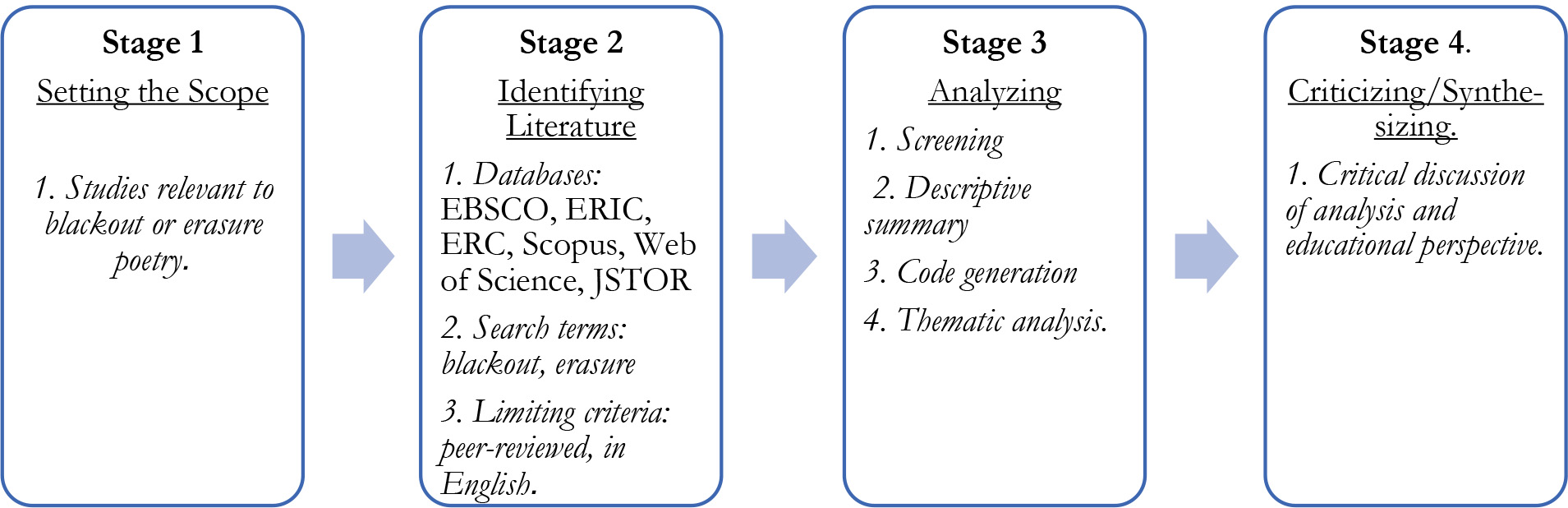
As I mentioned earlier, the terms blackout and erasure have been used interchangeably to describe the same practice. Subsequently, both terms were included in the string search. However, only articles that described the practice of blacking out were included in the final selection, regardless of how the practice is referred to by the author. The database and reference-list searches yielded about 87 hits, 44 of which were unique across the databases and bibliographies. From these, 24 articles met the inclusion and exclusion criteria set during the second stage of the review and were selected for the final analysis (see Figure 1).
For the thematic analysis, I followed Braun and Clarke's (2006) model. Because theme generation in this process depends largely on the researcher’s judgement, it requires careful consideration and adherence to systematic procedures. Methodologically, I sought to remain open and reflexive towards the scholars’ own interpretations of their experiences with blackout poetry. In practice, I first made notes during the collection of the articles by highlighting relevant passages. I then coded these highlighted passages, attributing codes that captured the articles’ main topics, descriptions of blackout poetry, and accounts of participants’ responses. For example, when an article discussed the use of blackout poetry in a classroom, the code learning instance was applied. Importantly, the codes were generated inductively, that is, they emerged from the data rather than being fitted into predetermined themes. After reviewing the codes, I used hand-drawn maps to organize and collate the codes into initial themes. I then refined these themes several times, analyzing the specific characteristics of each theme and cross-checking them across the full set of articles. I proceeded to interpret the findings. The three themes that developed through the analysis are discussed in the following section.
Resist, Reflect, Learn
The thematic analysis of the literature revealed three major themes that unveil some defining features of blackout poetry: (1) Resisting encompasses studies that reflect the practice of blackout poetry as an act of resistance and disruption. (2) Reflecting entails studies that unveil the capacity of blackout poetry to promote reflection and introspection. (3) Learning includes studies that position blackout poetry as an educational activity through which various kinds of learning can take place.
The first theme, resisting, was identified in studies that discuss the historical journey of blackout poetry and the literary and philosophical connotations of obscureness, or absence. Ramser (2020) traces the century-long history of blackout poetry and distinguishes it from erasure and other forms of found poetry. She describes the removal involved in erasure as violent and permanent, leading to the obliteration of the source text. In erasure poetry, nothing remains that resembles the original structure of the host text, unlike in blackout poetry. By adding visual elements, blackout poets can enrich the meaning of their work in ways that erasure poets cannot replicate. (Ramser, 2020). Coyle (2023) considers the functions, structures, and overarching philosophy behind blackout poetry, and through Derridean lenses, argues for its potential to recontextualize postcolonial studies by highlighting connections between erasing and censoring. He portrays the act of removal as meaningful, conceptualizing absence as an expression of “the inarticulate nature of the meaning of being” (p. 363). At the same time, he posits that blackout and erasure poetry share the same process and hence similar philosophical underpinnings.
Divergent perspectives arise in studies that discuss the philosophy that underlies blackout poetry. Some writers trace the etymology of the word erasure to notions of obliteration, thus highlighting its connotations of reduction or vandalism. Others focus on the meaning of blackout as a state of losing consciousness, or a purposeful redaction of text one wishes to conceal. Several scholars use the terms erasure and blackout interchangeably, sometimes positing shared philosophical reasoning between the two practices. Hence, one notable gap in the literature is the absence of a clear and universally accepted definition between the terms blackout and erasure. Given the distinct techniques employed in each practice, establishing precise definitions and distinctions is crucial for enabling a nuanced interpretation of their respective processes and products. What prevails across these studies is the attempt to understand the underlying philosophies that shape the practices of erasure and blackout, along with their literary connotations. In the acts of concealing and highlighting, the blackout poet gains agency and a degree of power over the narrative of the host text, seeking to resist it, disrupt it, and give it an alternative and new meaning.
Some scholars discuss the literary connotations of blackout poetry, often in conjunction with literary novels and the parallel concept of reduction or omission. Situating the literary text within the historical context of reduction practices can deepen understanding of authorial voices. In this context, blackout poetry is seen as a deliberate act of selection and omission that reveals intricate layers of meaning, thereby offering agency and power of the blackout poet over the narrative of the host text. Effinger (2022), for instance, offers a unique perspective by examining a collaborative project among incarcerated women who created a poetic adaptation of Shelley’s Frankenstein. The participants related their blackout poems not only to the novel but also to their experiences of incarceration, inclusion, exclusion, and erasure.
Howard (2018) examines the use of blackout poetry found in children’s books, analyzing how it functions as a literary device in the novels she studies. For instance, she discusses the scene in Kwame’s Booked in which the young protagonist, Nick, creates a blackout poem from The Adventures of Huckleberry Finn. Howard interprets this choice as an act of rebellion, considering the racial slurs and sociocultural connotations present in the host text. The act of blackout, in this context, is portrayed as a subversive and somewhat forbidden behavior for the protagonists, reflecting a form of cultural engagement and activism. It also exemplifies the power dynamics that reside in the practice of concealing and highlighting. Within the novel, Nick gains agency over the source text’s narrative and decides to tell a different story from a different perspective through his blackout poem. This literary approach adds a sociocultural dimension to the interpretation of blackout poetry, because it emphasizes the potential of the practice to serve as a vehicle for the resisting reader. In this context, blackout poetry can also be seen as a literary device that reflects erasures, disruptions, and fragmentations of reality. Despite the terminological ambiguity and the varying connotations, there appears to be a consensus among scholars that blackout poetry signifies addition rather than subtraction. Blackout poetry holds a potential to “speak back.” As Coyle (2023) suggests, blackout poetry practices can “develop a new form of democratic practices” (p. 379). At the same time, he notes that a deeper understanding of the theoretical foundations of both the form and the practice is essential for recognizing its political potential. The power of blackout poetry to exercise social critique through language and art makes it a transformative experience for its creator, who can reinterpret and reflect on the narratives of host texts.
Thinking about blackout poetry as a transformative experience where alternative meanings are discovered brings me to the second theme: reflecting. This theme was developed through studies that employ blackout poetry as a method for collecting, analyzing, and presenting research data. A common thread across these studies is the investigation of participants’ emotions and thoughts on various sociocultural phenomena. In this process, blackout practitioners often experience a simultaneous status of immersion and distance from themselves. For instance, Lee et al. (2021) used blackout poetry, among other methods, to make the voices of Latin youth heard. Using blackout poetry enabled the participants to reflect on and voice their immigrant, intercultural, and linguistic experiences and identities. Nelson et al. (2022) engaged in blackout poetry as a means to contemplate the constructed concept of the public good within educational contexts, while Keith (2023) employed blackout poetry as a method of poetic transcription to analyze interview data by transforming them into data-poems. Faulkner (2023) blacks out pages from a pregnancy guide, What to Expect When You Are Expecting, to tell another story of pregnancy. She attempts to “bring forth voices of ambivalence, anger, and disgust not visible in official discourse of pregnancy advice books and medical advice” (pp. 82-83), seeking to free words from authoritative medical discourses, open new possibilities, and reach new understandings. Scholars contend that the selective manipulation of words in blackout poetry brings up emotions and alternative voices in texts that were previously obscured or unheard.
Across these studies, an inherent ability of blackout poetry is observed: its ability to promote self-reflection and introspection. Doing blackout poetry offers opportunities to amplify voices concealed in another text and to discover new meanings through an immersive creative experience. This has positioned it as a compelling research method scholars have employed in experimental poetic inquiry and other qualitative studies. This immersive power of blackout poetry is exemplified in the experience of blackout poet Dodd Lee, who reflects, “I was simply, gloriously it seemed at times, immersed in the process to the point I was unaware of any particular ‘you-ness’…Erasing Ashbery allowed an escape from the self, then” (King, 2012). Scholars also comment on the intimate relationship created between the blackout poet and the host text, noting that the blacked-out parts contain stories and experiences known only to the blackout poet, as they reside in the choices they make (Nelson et al., 2022). What emerges here is a dimension of blackout poetry that invites new modes of thinking, understanding, and re-contextualizing, leading to alternative meanings and potential stories hidden within the host text. It grants the creator a possibility to temporarily distance themselves from the text and the act of writing. This process allows them to express voices that might otherwise remain obscured. At the same time, blackout poets can engage in conversation through their blackout poems and express their perspectives and critiques through an artistic medium. Despite the demonstrated potential of blackout poetry as a research method in poetic inquiry and other qualitative studies, the limited scholarly attention in this area leads researchers to use it experimentally. This underscores the need for a more well-defined methodological framework for the use of blackout poetry in research, indicating an exciting avenue for the future inquiry.
Reflective engagement and immersion in blackout poetry constitute key foundations in the creation of meaningful learning instances. The third theme identified in the literature, learning, describes studies that examine what can be learned through blackout poetry. That is, learning to work with literary texts, learning language, and practicing creative writing. Through primarily descriptive and theoretical inquiries, scholars describe their experiences with using blackout poetry with students, or they touch upon its educational potential. Additionally, they contend that blackout poetry facilitates the engagement of students with literary genres, especially poetry, and with artistic expression. At the same time, it is seen as a platform for teachers to explore different literature teaching approaches.
Some scholars underscore the linguistic advantages that can be gained through working with blackout poetry. Morales-Rodas et al. (2021), for example, introduced blackout poetry as a writing activity in an ELT classroom and explored students’ experiences through questionnaires. The findings revealed that several students found the activity challenging but conducive to learning new vocabulary, describing it as an engaging way to learn new words. Students additionally reported improvements in other areas, such as reading comprehension, creative writing, and sentence structure. Another study on students’ perceptions of doing blackout poetry indicated that they enjoy manipulating words and the structure of language, suggesting that the activity stimulates children’s creativity (Sulastri et al., 2023). Allen and Simon (2021) reported on their work with on English Language Arts (ELA) students. The students created blackout poems from Bradbury’s Fahrenheit 451, a dystopian novel that addresses issues of censorship and freedom of thought. Through this activity, they engaged with language, reading, and writing, and were able to express critical and literary responses to the novel through their blackout poetry. Both Ladenheim (2014) and Sulastri et al. (2023) note that blackout poetry enhances students’ skimming and summarizing skills. As they carefully search and select a few words and phrases to encapsulate their thoughts, they actively practice skimming strategies.
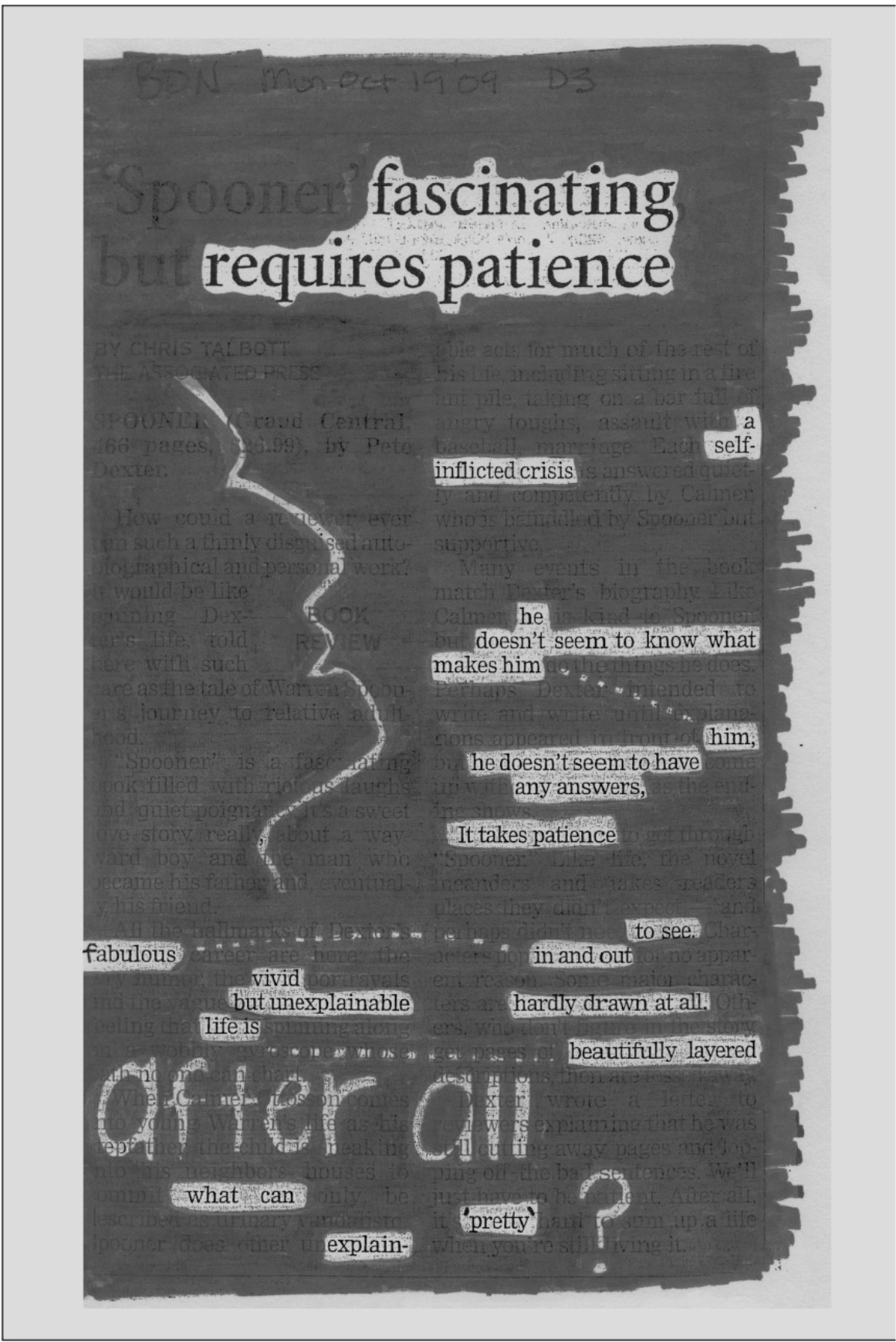
Another notable aspect highlighted in the studies is that blackout poetry can help students to break down a complex literary text into smaller more manageable components. Ladenheim (2014) describes how her students blacked out newspaper articles to create poems that reflect the language and poetry of Sappho (see Image 3). As she notes, students’ poems echoed Sappho’s themes. Students expressed an appreciation of Sappho’s techniques and understood the fragmentary nature of Sappho’s poetry. They also became more attuned to the visual presentation of poetry, seeing spaces as sites of creative potential rather than as mere absence (p. 46).
Image 3
Blackout poem from a student. Used with the permission of M. Ladenheim, from the article ‘Engaging Honors students through Newspaper blackout Poetry’ (Ladenheim, 2014, p. 47).
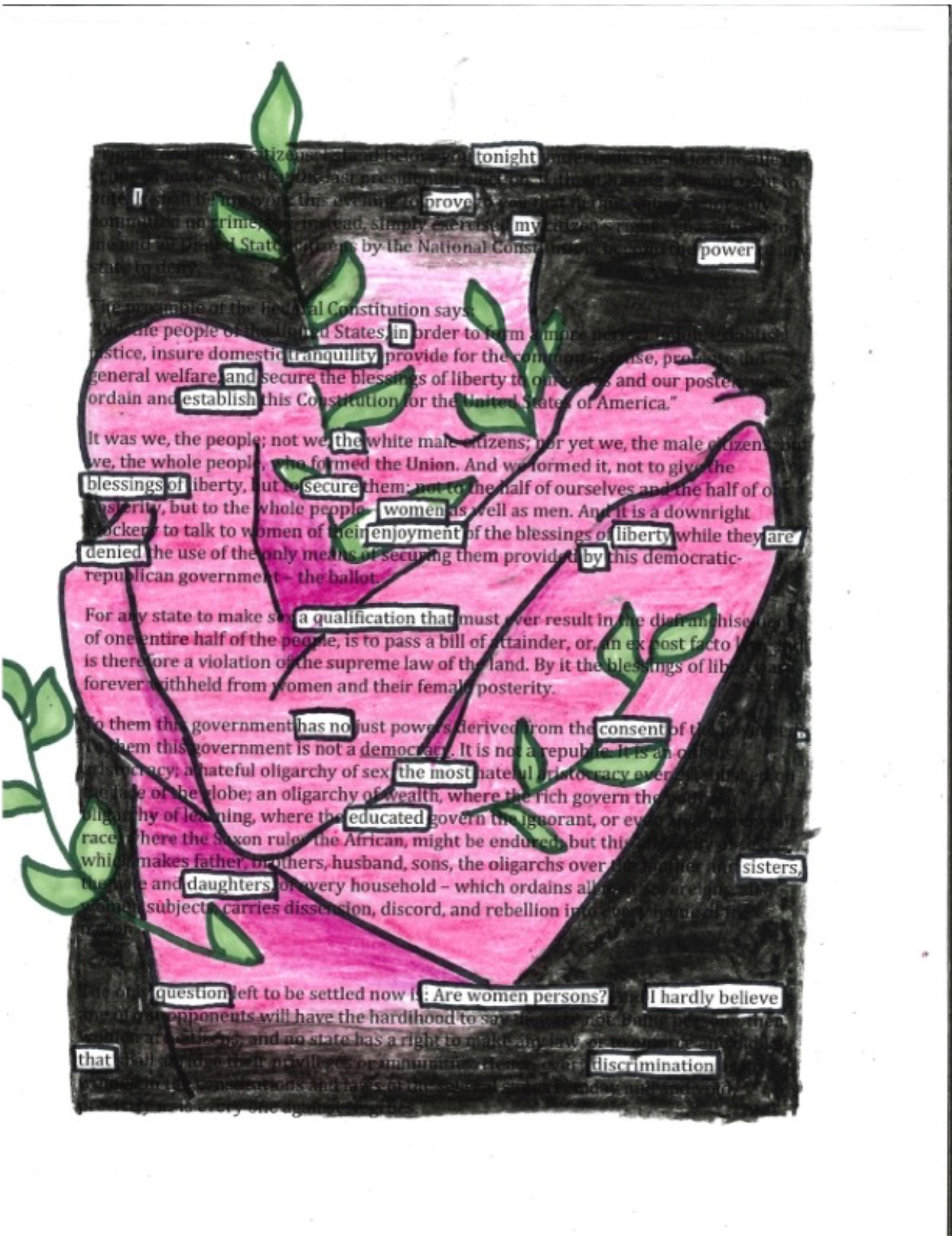
Blackout poetry also serves to tame the fear of facing a blank page. Because the words already exist with a larger “ocean of text,” the writer is called to creatively re-contextualize the words of the host text and generate a poem. Blackout poetry is also described as a way to “uncover alternative ways of knowing” (Jawaheer, 2023, p. 28), inviting introspective analyses of personal experiences and understandings. Echoing this perspective, contemporary poet Janet Holmes views the practice of concealing text as an opportunity to amplify alternative voices (King, 2012). Gómez (2022), for example, used blackout poetry in a social studies classroom to stimulate critical discussions and to teach about historically marginalized voices. He provides a thorough description of how to employ blackout poetry in the classroom to promote reflection and learning about social topics, such as marginalized voices. Through blacking out texts that represent marginalized voices, students expressed their understandings of the historical significance of marginalized voices through their poems (See Images 4 and 5). They critically discussed both the host texts and their blackout poems. Students were eager to share the rationale behind their word choices and the visual art that accompanied their blackout poems, suggesting a potential impact on students’ motivation and engagement with the practice.
Image 4
Student’s blackout poem on marginalized voices. Used by the permission of M. Gómez, from the article ‘Engaging with historically marginalized voices through blackout poetry’ (Gómez, 2022, p. 224).
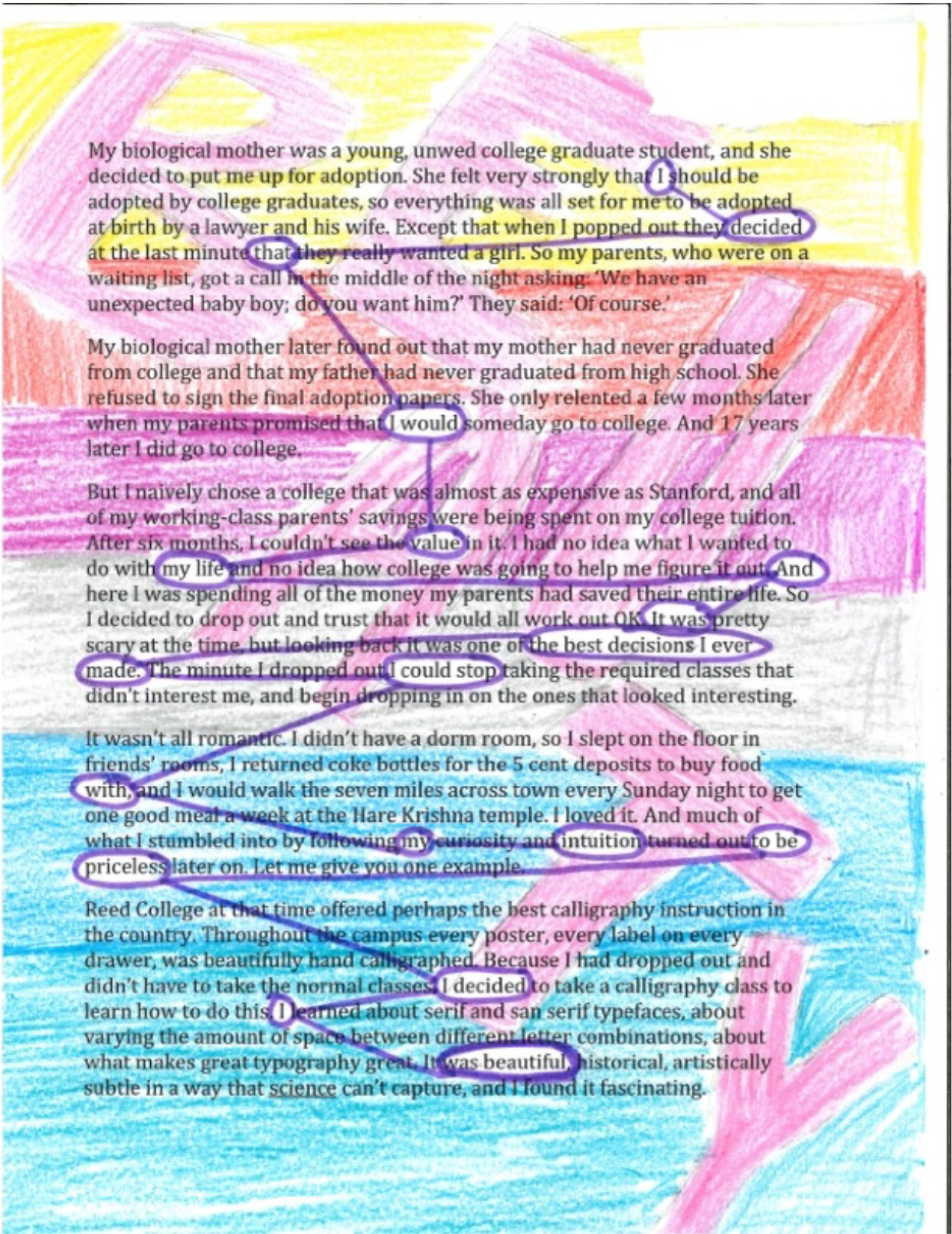
Image 5
Student’s blackout poem on marginalized voices Used by the permission of M. Gómez, from the article ‘Engaging with historically marginalized voices through blackout poetry’ (Gómez, 2022, p. 226).
Studies investigating the pedagogical potential of blackout poetry predominantly adopt a descriptive approach, offering an elaborate account of students' experiences. However, a comprehensive exploration of theoretical underpinnings or the use of blackout poetry in foreign language classrooms is often neglected. Notable exceptions, such as Pindyck (2017), explore the theoretical understanding of the kind of reading involved in blackout poetry through a Deleuzian lens. Pindyck (2017) characterizes this mode as a more intuitive reading, one which follows “a logic of sense that resists communication and even meaning making” (p. 60). Morales-Rodas et al. (2021) are another exception, as their study focuses on the use of blackout poetry in the English as a foreign language classroom setting and examines learners’ experiences with language learning through the practice. In general, the explorations presented across these studies showcase the potential of blackout poetry to promote experiential learning. However, analyzing students’ illustrations and visual representations is seldom thoroughly considered, indicating the need for further research on the visual aspects of blackout poetry. In any case, a thorough consideration of learning theories that reflect the reasoning behind using blackout poetry in the classroom may help establish a stronger theoretical framework, elucidate the intricate rationales inherent in such literary activities, and further refine the integration of blackout poetry within learning contexts.
Literature, Language, and Sociopolitical Discourse Through Blackout Poetry
In reviewing the academic literature that surrounds blackout poetry, several features surface as central, and perhaps inherent, to the practice. Specifically, blackout poetry emerges as a practice that expresses a form of resistance, a medium for amplifying alternative narratives or obscured voices, and a practice that invites self-reflection. Furthermore, blackout poetry can make underlying meanings of texts more salient while facilitating processes of meaning negotiation and language interaction. Considering these attributes, I argue that blackout poetry holds considerable potential for promoting literary competence, encouraging language exploration, and supporting sociopolitical discourse in English language learners.
Considering literary competence as Torell (2001) describes it, blackout poetry emerges as a practice that in its unique way can promote various aspects of literary competence among English language learners. Despite the contemporary hesitation towards including poetry in the foreign language classroom (e.g., Khatib, 2011; Mart, 2017), blackout poetry can make poetry writing accessible for learners of all ages. First, by exploring underlying discourses, or what is left unsaid, learners can explore symbolism, metaphors, and the ideological power of language. The inclusion of artistic visual illustrations coupled with an exploration of prosaic and poetic language can be an opportunity to explore imagery and the multifaceted nature of expression. Thematic exploration can also be promoted through blackout poetry. Ladenheim (2014) describes how one of her students created a blackout poem from a novel exploring the theme of “unrequited or unattainable love as it is found in Sappho’s poetry” (p. 50). The author emphasizes how blackout poetry proved to be “a process of revelation and uncovering of meaning” (p. 52).
In the process of doing blackout poetry, learners engage in a form of immersion that unfolds within and through this practice itself. Such immersion assumes a deep engagement with language, poetry writing, and the expression of ideas through linguistic choices. This process aligns closely with principles of experiential learning and the concept of learning by doing (Dewey, 1994). By reading or creating blackout poems, learners can explore and experiment with literary elements, such as metaphors or allusions, thereby building their performance competence (Torrell, 2001). As highlighted in the literature review, blackout poetry can be used to express some kind of resistance to the narrative of the host text (e.g., Howard, 2018). Thus, blacking out a page gives learners some sense of control over the narrative of the host text, establishing an intimate relationship of meaning negotiation between reader and text. In addition, the power of blackout poetry to promote self-reflection and introspection, as emphasized in the literature review (e.g., Lee et al., 2021), invites learners to articulate their own unique understandings and interpretations, thereby strengthening their constitutional competence. All these instances can make literary exploration accessible even for young language learners by inviting them to experience several aspects of literature and to express themselves poetically and visually, despite their potentially limited linguistic proficiency in the early stages of language learning.
Through blackout poetry, students can also explore the target language with its denotations and connotations. As seen in studies where blackout poetry is used in language classrooms (e.g., Morales-Rodas et al., 2021), students report the advantages blackout poetry has on their language learning. By selecting words to create a poem out of a morass of text, learners engage actively with the semantic, syntactic, and grammatic structures of the target language. Srikanth Reddy, for instance, points out that this process helped him learn a lot about syntax and grammatic construction. He sees this process as “a technique that orients one toward questions of word order. You have to find a sequence of words in the source text that works as a sentence of your own” (King, 2012, n.p). In blackout poetry, words are not vague and abstract signs; they exist on the page and learners can explore and manipulate them to create meaning. Poet Travis Macdonald echoes this notion, by expressing how this practice has helped him recognize the material substance of language: “Words are […] messy, grainy, globular physical objects that we can reach out and grab, cut, shape, mold, rip and manipulate” (King, 2012, n.p).
The interaction with language in blackout poetry is also mirrored in the back-and-forth action of reading and writing, a process that offers learners a different kind of reading experience. As Pindyck (2023) notes, this practice necessitates a departure from conventional, commonsense reading-level logic, towards a more intuitive framework. This alternative logic, rooted in a sense-oriented approach, resists traditional modes of communication and meaning-making. Reading, within blackout poetry, transforms into a practice of aligning oneself with the creative potential inherent in the words and spaces on the page. Blackout poetry thus operates as a literacy technique predicated on sensory experience and physical interaction. Consequently, this method can stimulate students, particularly those who may feel resistant to poetry writing or those afflicted with spelling anxieties, as this activity frees them from concerns about producing correct spelling (Pindyck, 2023).
As seen in the literature, several authors have explored the meanings and implications of blacking out (e.g., Ramser, 2020). The term blackout can be defined as the absence of light; it can be political, as in the government withholding information from the public; and it can also mean a temporary loss of consciousness (Oxford University Press, n.d.). The connotations of the word reveal the multifaceted nature of its applications. The sense of blackout as a temporary loss of consciousness alludes to a momentary subconscious selection of words. Allowing such playful exploratory moments with language may seem unstructured, yet they represent an equally important form of engagement for language learners. In such moments, learners can follow their intuition and explore the target language through morphological, phonological, or semantic characteristics that attract their attention. Learners may choose some words that hold special connotations for them or that reflect their understanding of what they read or want to express. They may even choose words simply because they sound or look amusing or intriguing. Such seemingly unstructured play can be important for learners’ language intuition while also promoting reflection on the mechanisms of the target language. At the same time, the freedom to select words, along with the deconstruction of the idea that poetry is a rigid genre, can encourage learners to engage with poetry, thus making it more accessible and malleable.
In addition to its verbal dimension, blackout poetry also incorporates visual language. Visual elements are integral to the blackout poem, and they are there to either guide the reading or to add layers of meaning. Even the simple act of blacking out can be an aesthetic representation of the text and the poet’s ideas. The spatial placement, the sense of reading direction, and the aesthetic effect a blackout poem has depend largely on these visual elements. These elements sometimes evolve into elaborate illustrations that merge with the text, while other times they remain minimalist representations, giving verbal language the protagonist role. Incorporating moments of artistic and creative experimentation into the language classroom can not only strengthen learners’ motivation and enjoyment but also inspire meaningful learning and aesthetic experiences for those who are able to reflect on and interact with the task at hand (Illeris, 2016). Such instances can be valuable moments for learners to witness and manipulate the multifaceted nature of language, text, and expression.
Moving to a sociocultural perspective, the analysis of the literature unveiled the potential of blackout poetry to signify resistance, promote introspection, and amplify obscured voices, thereby triggering critical dialogues on various sociopolitical topics through poetry (e.g., Faulkner, 2023). Erasure poet NourBese Phillip exemplifies this potential in her work Zong!, where she uses erasure as an act of “mutilation,” referring to “the intent of the transatlantic slave trade […] to mutilate languages, cultures, people, communities and histories” (Cheng, 2016, n.p.). The poet reveals the resisting nature of highlighting and obscuring practices, such as blackout poetry, suggesting that these acts constitute meaningful interventions that bear the ideology and voice of the poet. In Effinger’s study (2022), the incarcerated women used blackout poetry to start a conversation about the challenges of reintegrating into society after their release. Similarly, Faulkner (2023) describes blackout poetry as a novel form of conversational protest, where the blackout poets have the power to reflect and reveal the deceiving words and statements of men in power regarding motherhood (p. 82).
These authors highlight the potential of blackout poetry to express ideologies and to engage poets in sociopolitical conversations. Engaging language learners in blackout poetry becomes then an opportunity to resist the dominant narratives and disrupt literary and cultural norms. Thus, already from the process of choosing parts of text to conceal or reveal, learners have the control and agency over the narrative of the host text, thereby gaining ground to participate in sociopolitical discourse. In this context, language learning becomes a conduit for offering children powerful tools for communication, social interaction, and criticism (Lovat, 2013). Through acts of reflection and resistance to norms, the process of blacking out enables blackout poets to position themselves within sociopolitical discourse, to engage in meaningful conversations, and to voice their intercultural and multilingual identities, despite potential linguistic limitations.
Conclusion
In sum, the literature review of scholarly research on blackout poetry, coupled with a thematic analysis, highlights three main themes: resisting, reflecting, and learning. These themes emerged across studies that grapple with the philosophical and literary connotations of blackout, studies that explore blackout poetry as a research method aiming to uncover underlying meanings and encourage self-reflection, and studies that explore blackout poetry in education. Retrieving these underlying themes that surround blackout poetry is like pulling a thread, wherein each tug reveals the nuanced nature of the practice, allowing to define its distinct characteristics, and, therefore, conceptualize its possibilities for English language learners. Through processes of meaning negotiation, personal expression, reflection, immersion, language interaction, alternative voice amplification, and resistance, blackout poetry can promote aspects of literary competence, support language exploration, and encourage sociopolitical discourse among English language learners. In doing so, it offers meaningful opportunities for a holistic approach to learning within the foreign language classroom. Yet the status of current research on blackout poetry is rather limited, thus prompting a call for well-defined objectives and a clearer delineation of its role as a literary genre, a research medium, and an aesthetic and educational activity. In essence, building on the foundations laid by existing scholarship on blackout poetry, further investigation of how blackout poetry can be used in foreign language classrooms can yield insightful possibilities for English language learners and contribute to bridging the divide between language and literature.