
Approaching historic reindeer herding in northern Sweden by stable isotope analysis
DOI:
https://doi.org/10.65612/jonas.v19i.59299Keywords:
reindeer pastoralism, stable isotope analysis, carbon, nitrogen, sulphur, bone collagen, Sámi cultures, northern Sweden, diet, mobilityAbstract
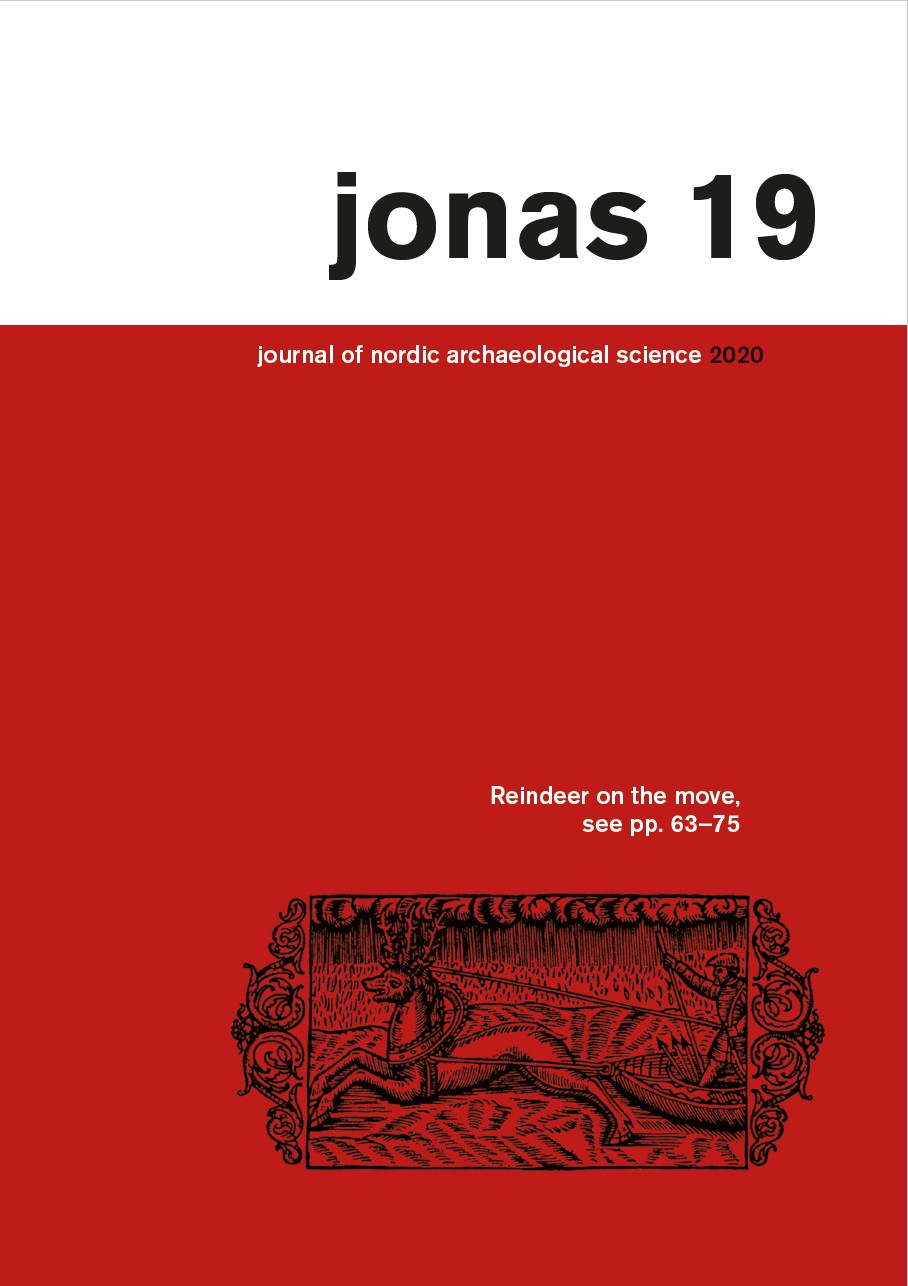
A strong cultural connection exists between reindeer and modern Sámi identity and economy. Reindeer domestication is, however, a rather late event, and there are many Sámi who live off resources other than reindeer herding. The use of stable isotope analysis on historic reindeer from different geographic areas can contribute to analysing both the processes involved in reindeer domestication and different environmental utilization by the Sámi. In this study, reindeer bones from six different sites in northern Sweden, ranging in date from the 11th to the 20th century, were analysed for stable isotopes to study how reindeer have been utilized in various historic contexts – settlements, offering sites and a marketplace. The stable isotope analysis demonstrated different practices in utilization of reindeer, such as foddering. Foddering is suggested to have caused the elevated δ15N values found in reindeer at the offering sites Vindelgransele and Unna Saiva, as well as at the settlement Vivallen. The analysis further indicates that the offering sites were used by single Sámi groups. An important outcome of our study is that the biology of reindeer in Sápmi was culturally influenced by the Sámi even before the reindeer was domesticated.
Downloads
Published
Issue
Section
License
Copyright for content in Volumes 3 – 7 is held by the authors.
Copyright for content in Volumes 8 – 20 is held by the Archaeological Research Laboratory.


