
Jacob Berzelius and antiquarian research
DOI:
https://doi.org/10.65612/jonas.v8i.66112Abstract
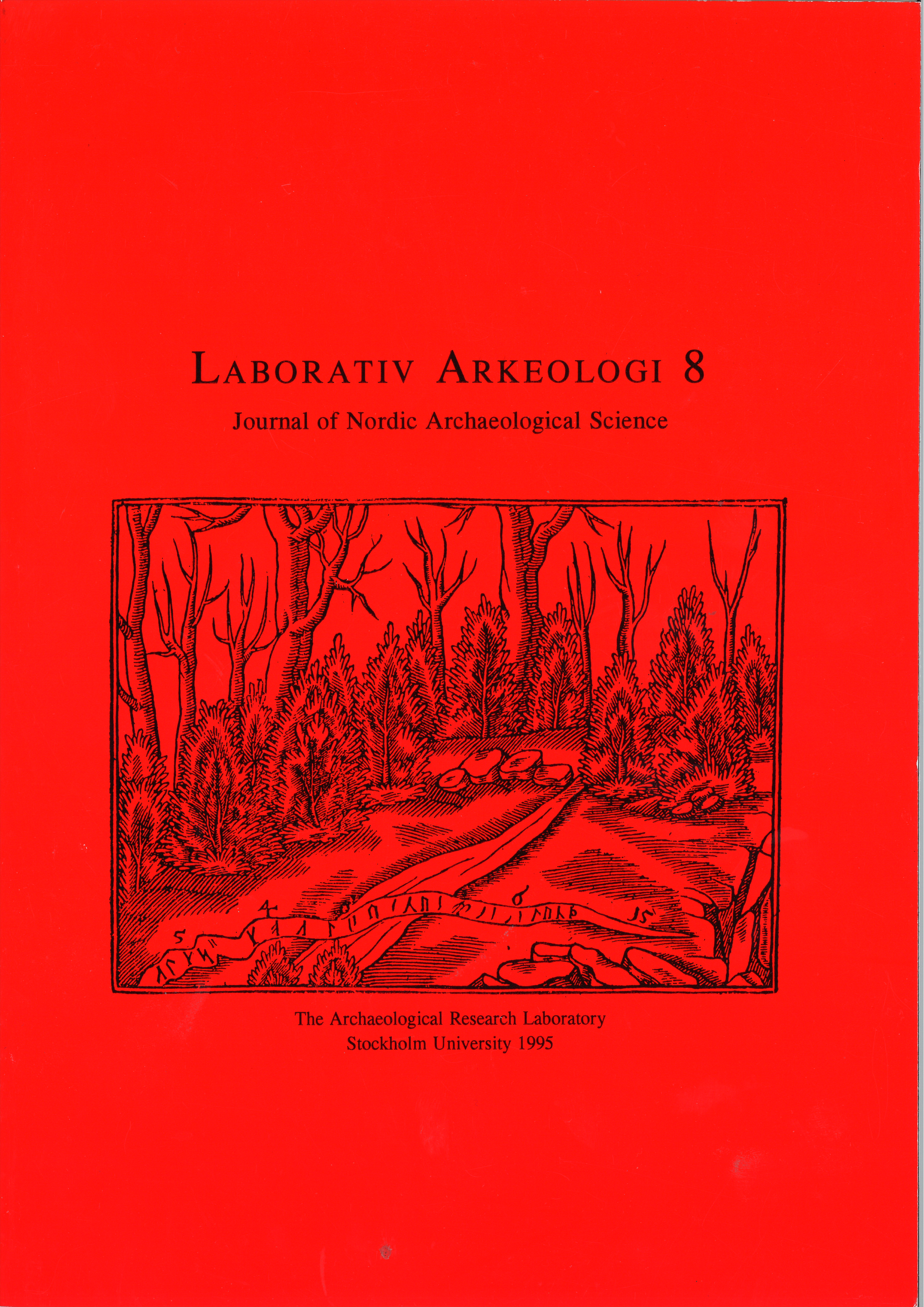
The work of the famous Swedish chemist Jacob Berzelius (1779-1848) at least twice touched upon archaeology. First, he examined the metal content of a number of Bronze Age objects from Denmark, determining that they lay within the ex-pected range of c. 15 parts tin to 85 parts copper. Second, his 1836 examination of the supposed long runic inscription about King Harald Hildetand on the rock-face in Runamo, Blekinge, revealed only natural rock-formation processes. Other sci-entists soon supported him and the reiterated claims by Copenhagen geologist Forchhammer and philologist Finn Magnusen to the contrary were finally crushed by Danish archaeologist Jens Jacob Worsaae in 1844.
Downloads
Published
Issue
Section
License
Copyright for content in Volumes 3 – 7 is held by the authors.
Copyright for content in Volumes 8 – 20 is held by the Archaeological Research Laboratory.


