
Linköping - en grönare stad?
DOI:
https://doi.org/10.59008/meta.2025.44491Abstract
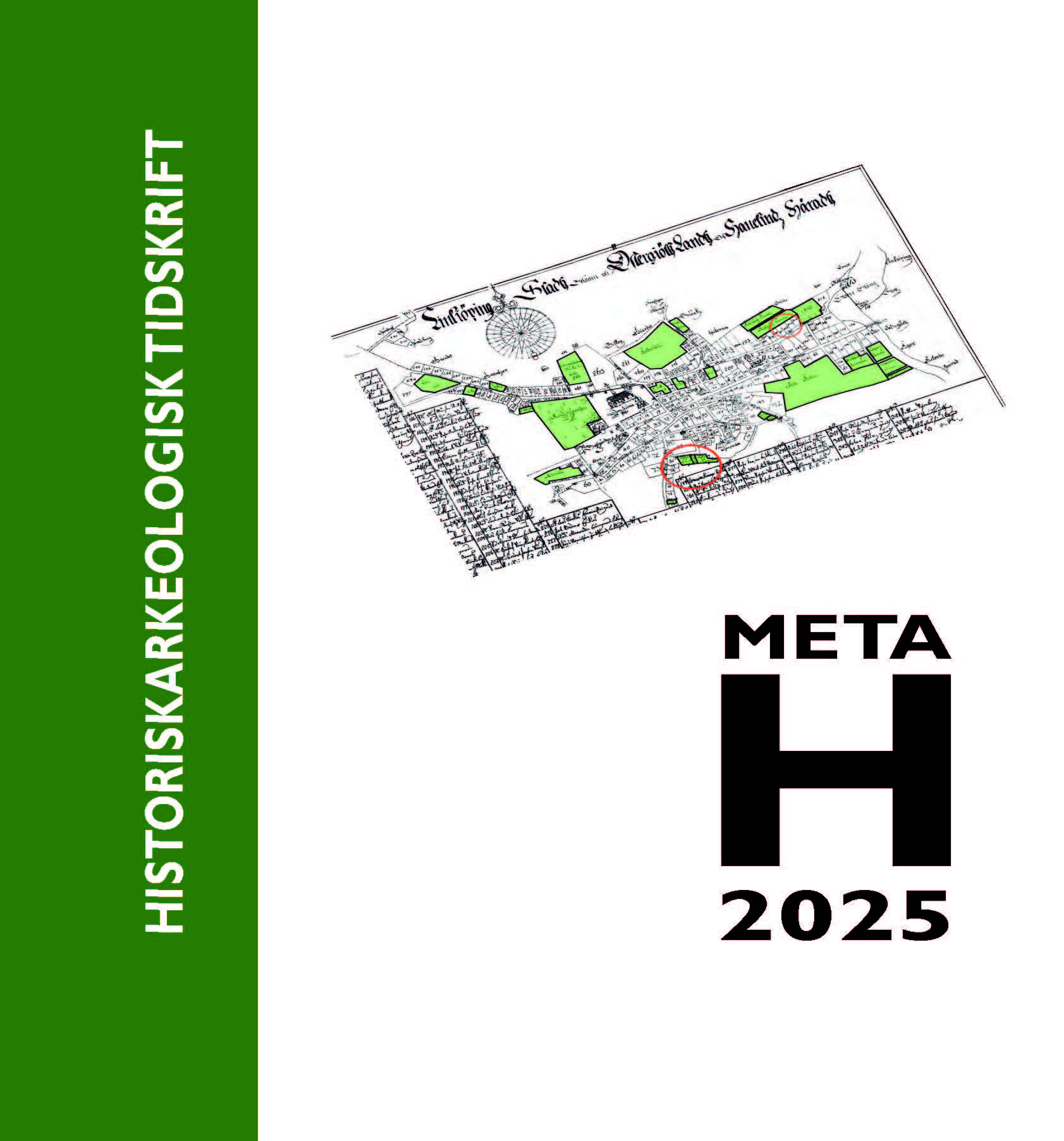
Identifying and making visible the cultivated parts of a town is essential to understanding the complexity of the medieval and early modern town. To study historical gardens, you need to work inter- or multidisciplinarily. The following article will present some results from an interdisciplinary horticultural archaeological study of the town of Linköping during the period approximately 1600–1800, where results from two large-scale archaeological investigations, macrofossil analyses and analyses of three historical maps have been put together in an analysis of the towns cultivated parts. By showing how the different source materials both confirm and complement each other, a new way of approaching questions about a town´s complexity, formation and development is presented.
Publicerad
Referera så här
Nummer
Sektion
Licens
Copyright (c) 2025 Emelie Sunding

Det här verket är licensierat under en Creative Commons Erkännande 4.0 Internationell-licens.


